Hampton Roads Bulkhead: Bulkhead Repair, Seawall Work and Marine Construction on the Chesapeake Bay Tidal Rivers, VA
Hampton Roads Bulkhead is a local marine construction contractor serving the tidal rivers of Hampton Roads, Virginia, from Virginia Beach and Chesapeake through Norfolk, Portsmouth, and Newport News. We repair and replace failing bulkheads and seawalls: tie-back and anchor resets, vinyl and sheet-pile walls, void and backfill repair, living shorelines and riprap, plus docks, piers, and boat lifts. We build to the standards the Virginia Marine Resources Commission and the Joint Permit hold this shoreline to.
We are not a foundation-repair franchise, and we do not inject your yard with foam and call the wall fixed. When a bulkhead leans, sinks a yard behind it, or opens a sinkhole at the cap, the failure is in the wall, the anchors, or the toe, and that is what we rebuild. Every job gets a written estimate before anything starts, and we tell you plainly whether a repair or a full replacement is the honest call.
Call for a Free Estimate- Licensed and insured in Virginia
- Local marine contractor, not a foam-injection franchise
- Built to VMRC and Joint Permit standards
- Vinyl sheet pile that will not rot or corrode
- Serving the whole Hampton Roads waterfront
Bulkhead Repair
A bulkhead is the wall holding your yard back from the tidal river. When it starts to fail, the ground behind it drains out on the falling tide, and you see it as a sinking yard, a soft spot, or a sinkhole at the cap. A leaning wall has lost its anchors and is being pushed over.
We repair failing bulkheads at the cause: reset tie-backs, rebuilt toes, spliced sheet pile, and compacted backfill under a new cap. We fix the wall, not the symptom, and we tell you honestly when a repair beats a rebuild.
Bulkhead Replacement
There is a point where a wall is past saving: sheathing rotted in runs, piles gone at the mudline, tie-backs lost, the whole wall leaning over the water. New anchors on a wall that far gone are money after a lost cause.
We build new vinyl sheet-pile walls sized to your water: a driven face, a proper tie-back system, filter fabric, clean backfill, and a cap that ties it together. Priced by the linear foot, with both repair and replacement shown side by side.
Tie-Back & Anchor Repair
Most bulkheads do not fall because the face rotted. They fall because the anchors let go. The tie-backs and deadmen behind the wall hold its top against a yard full of wet soil pushing toward the river. Corrode or pull them and the wall leans.
If the face is still sound, a leaning wall is a repair, not a replacement. We install new helical anchors and deadmen, pull the wall back toward plumb, and re-tension it with hardware that survives the salt, at a fraction of a full rebuild.
Vinyl & Sheet Pile Walls
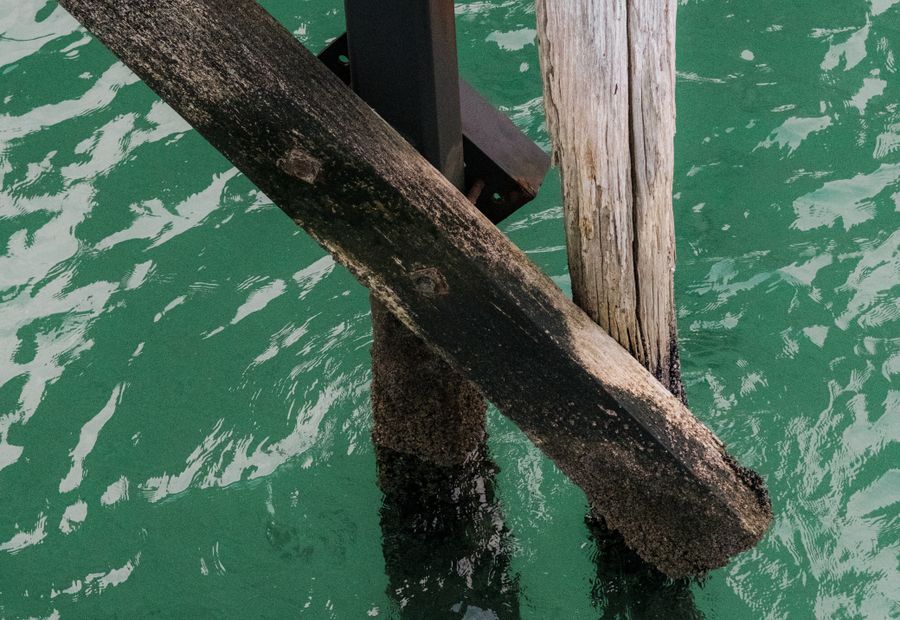
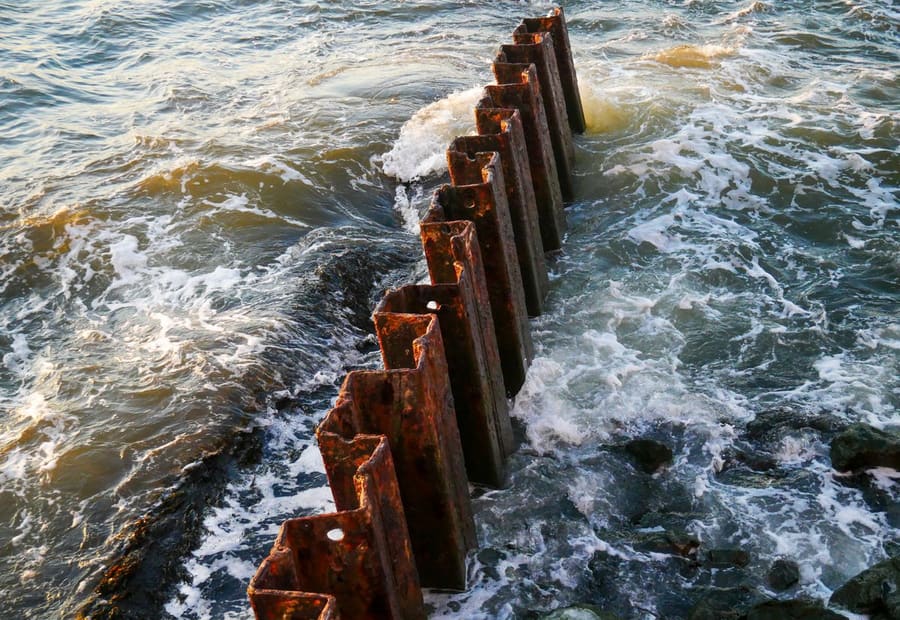
The face of a modern bulkhead here is sheet pile, and on brackish water the material matters. Timber rots at the tide line and the borers eat it. Steel rusts without protection. Vinyl does neither.
We drive vinyl, composite, and steel sheet pile sized to the wall's height, the soil, and the water depth. A vinyl wall with good anchors and a deep toe routinely gives thirty to forty years on the Lynnhaven and the Elizabeth.
Living Shoreline & Riprap
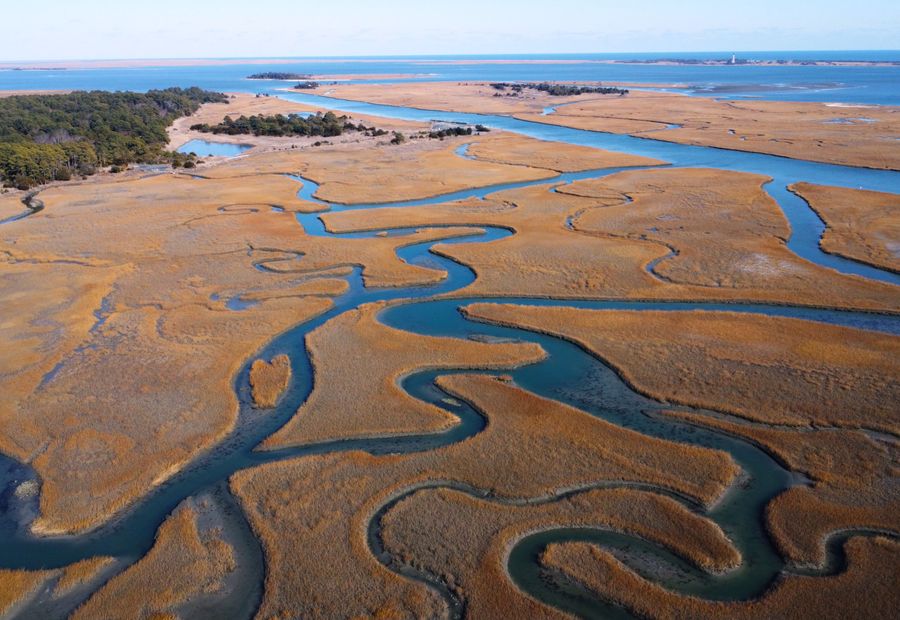
Not every eroding bank needs a vertical wall, and Virginia law prefers a living shoreline where the site suits it. On sheltered tidal water, a rock sill with marsh grass holds the bank, absorbs wave energy, and permits easier than a wall.
We build living shorelines and riprap revetments as well as walls, and on the right bank we will tell you the softer approach is the better value. On exposed banks, graded rock keyed into the toe is the durable answer.
Docks, Piers & Boat Lifts
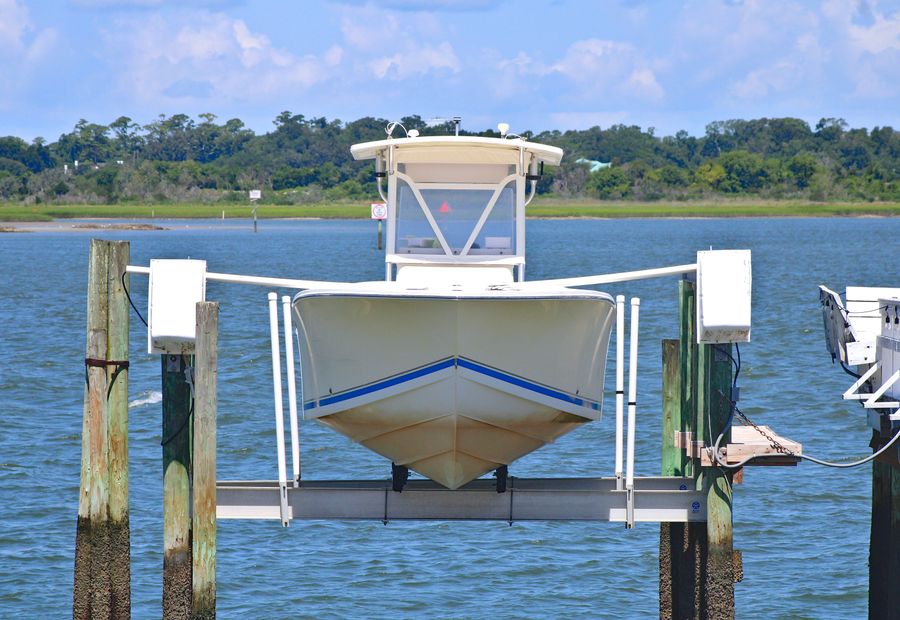
The same tide that works your wall works your dock. We repair and build piers and docks and install boat lifts sized to your boat and your tidal range, with the same crew and barge that handles the walls.
One marine contractor for the whole waterfront means one mobilization, one permit conversation, and one crew that knows how the wall, the dock, and the lift fit together at the bank, instead of three companies pointing at each other.
Why Hampton Roads Owners Choose Us
- We fix the wall, not the yard. Foundation franchises sell foam injected behind a wall as a seawall repair. Foam does not reset a lost tie-back, rebuild a scoured toe, or replace rotted sheathing. We rebuild the structure, which is what actually holds a tidal bank.
- Vinyl that will not rot or corrode. We replace tired timber with vinyl sheet pile that is inert in brackish water, and we use galvanized or stainless hardware that survives the salt instead of rusting out in a few seasons.
- We build to the Joint Permit. Work below the tide line runs through the Virginia Marine Resources Commission, the Army Corps, and your city wetlands board. We handle the permit side for what we build, so the plan is one that can actually be approved.
- We tell you repair or replace, straight. When a wall can be reset we save it. When it is past saving we say so. Every estimate shows the honest path with real linear-foot numbers, not the long way around.
- Local crew, on this water every week. The people who quote your wall are the people who build it. We know the Lynnhaven, the Elizabeth, and the bay, cove by cove.
Built for the Hampton Roads Tide
Hampton Roads is one of the most water-defined places in the country, a region of independent cities wrapped around the mouth of the Chesapeake Bay where the James, the Elizabeth, the Lafayette, the Nansemond, and the York Rivers meet salt water. The water here is brackish and tidal, rising and falling a few feet twice a day, and that daily movement is what works a bulkhead. Every seam, every anchor, and every foot of toe is loaded and unloaded with the tide, season after season, until the weakest part gives.
This region is also sinking while the sea rises, which is why Norfolk and Hampton flood on sunny-day high tides and why the water keeps climbing on walls that were built for a lower line. A bulkhead installed a generation ago now takes the tide higher on its sheathing than it was designed for, so backfill washes out through tired seams and the failures come faster. Add a nor'easter or a hurricane surge like Isabel, which overtops caps and scours toes across the whole region at once, and the aging walls of the older neighborhoods reach their end together.
The soils along these rivers are largely sand and soft sediment, which is a gift and a problem: sheet pile drives into them well, but a wall short on toe embedment or anchoring kicks out or leans in them just as easily. Understanding the tide, the rising water, the soil, and the Joint Permit is the difference between a wall that stands for decades and one that leans out over the river in a few years.
How a Bulkhead Job Goes
On-Site Look
We come to the water, check the cap, the lean, the toe, the anchors, and the yard behind the wall, and give you a written estimate with scope and price before anything else.
Permit Check
For a new or relocated wall we prepare the Joint Permit Application to the VMRC, the Army Corps, and your wetlands board, so the plan is one that can be approved.
Build or Repair
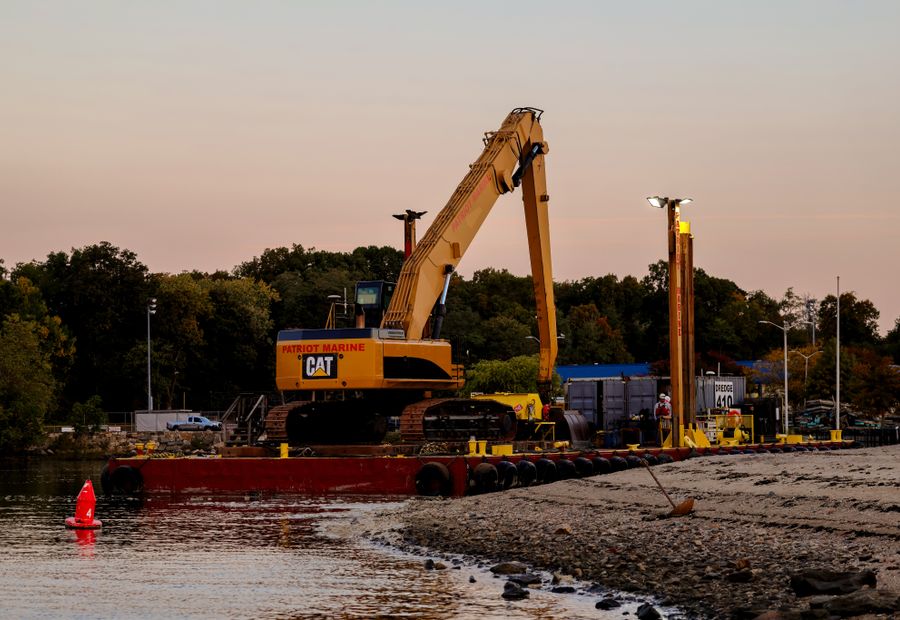
We work from the upland side or a barge as the site needs. Sheet pile, tie-backs, toe, and backfill are built in the order that makes the wall hold.
Backfill & Cap
We refill and compact the void behind the wall over filter fabric and pour or set a cap that ties the wall together and keeps the yard from draining out again.
Walk It With You
We walk the finished wall with you, show you what was done, and leave you a bulkhead that stands plumb and holds your yard back from the tide.
Bulkhead & Seawall Costs in Hampton Roads
Waterfront wall work is priced by the linear foot. These are real working ranges for these tidal rivers, not invented numbers. Your actual cost depends on wall height, water depth, access, and how much failed material has to come out. Every job gets a free written estimate before work starts.
| Work | Typical Range | Notes |
|---|---|---|
| Tie-back / anchor reset (leaning wall) | $150 - $300 per ft | If the face is still sound |
| Cap & void / backfill repair | $120 - $250 per ft | Refill, compact, new cap |
| Vinyl sheet-pile replacement | $400 - $700 per ft | By wall height, depth, access |
| Riprap revetment | $200 - $450 per ft | Graded stone, keyed toe |
| Living shoreline | $200 - $500 per ft | Sill, sand, marsh plantings |
| Dock / pier repair | $1,500 - $12,000+ | By pilings, framing, and decking |
What moves the price:
- Wall height and water depth: a taller, deeper wall needs a bigger section and more toe
- Access: a barge job costs more than driving sheet pile from the upland side
- How much has to come out: removing a failed timber wall adds to a replacement
- Anchoring: helical anchors and deadmen sized to the surcharge behind the wall
- Permit path: a new or relocated wall is the full Joint Permit review
Frequently Asked Questions
How do I know if my bulkhead needs repair or replacement?
A wall with a sound face but a failed tie-back, a scoured toe, or a cracked cap is usually a repair. When the sheathing is rotted in long runs, the piles are gone at the mudline, and the wall leans past plumb, it is a replacement. We show both on the estimate with real numbers so you can see why.
Why is there a sinkhole in my yard behind the wall?
The wall is leaking. Soil drains out through an open seam, a lost anchor, or a scoured toe on the falling tide, and you see it as a void or sinkhole at the cap. Filling the hole without fixing the wall just gives the next tide more to take.
Do I need foam injection to fix my seawall?
No. Foundation franchises sell injected foam as a seawall repair, but it does not reset a lost anchor, rebuild a toe, or replace rotted sheathing. A tidal wall fails structurally and is fixed structurally. We rebuild the wall itself.
Do I need a permit to repair my bulkhead in Virginia?
In-kind, in-place repair of a lawful wall is usually a lighter authorization. A new or relocated wall runs through the full Joint Permit Application to the Virginia Marine Resources Commission, the Army Corps Norfolk District, and your local wetlands board. We handle the permit side for what we build.
How long does a vinyl bulkhead last here?
A vinyl sheet-pile wall with properly set tie-backs and a good cap should give thirty to forty years on these brackish tidal rivers, often more. Vinyl does not rot or corrode, so the life of the wall is set by the anchoring and the toe, which we build to outlast the panel.
Should I build a wall or a living shoreline?
It depends on the bank. On sheltered, low-energy water a living shoreline holds well, permits easier, and is Virginia's preferred method. On a bank taking real fetch and wake, a wall or a riprap revetment is the durable answer. We read the water and tell you honestly.
My wall is leaning. How urgent is it?
Urgent. A leaning wall is already losing backfill, and each tide and each storm takes more. Reset early with new anchors and it is a repair; leave it and it becomes a full replacement. Get it looked at before the next storm season.
Serving the Hampton Roads Waterfront
We repair and replace bulkheads across the region, from Virginia Beach and Chesapeake through Norfolk, Portsmouth, and Newport News to the Peninsula. Every river and cove has its own tide, its own wake, and its own bank. We know the water.
Ready to Get Your Wall Handled?
Call (757) 555-0182 for a free estimate. Tell us what you are seeing: a yard sinking behind the cap, a wall leaning toward the river, a sinkhole at the wall, storm damage, or a bulkhead you want replaced. You will get a straight answer on cost per foot, on the Joint Permit side, and on whether a repair or a replacement is the honest call for your water.