Bulkhead Replacement & Rebuild in Hampton Roads, VA
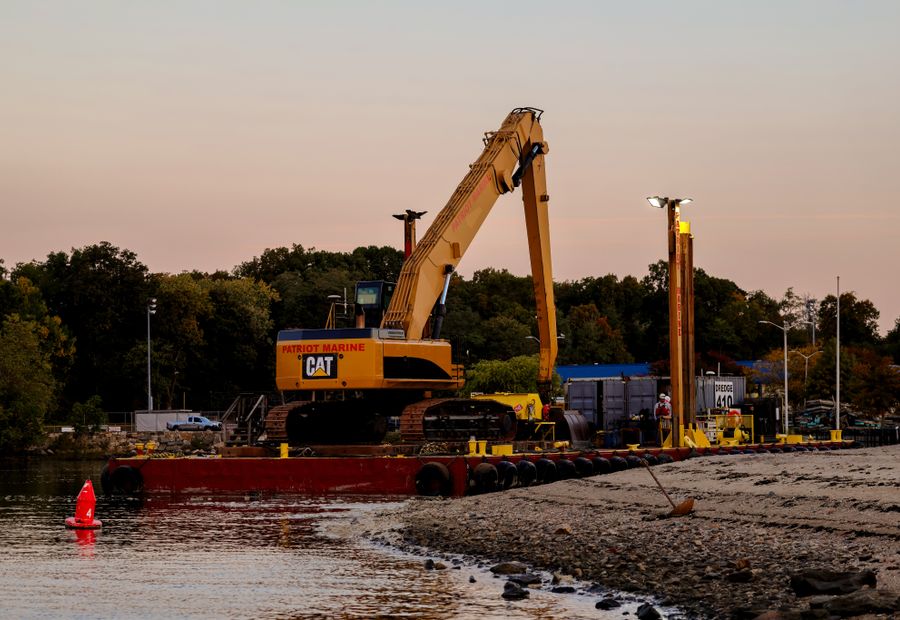
There is a point where a bulkhead stops being worth repairing. The sheathing is rotted or cracked in long runs, the piles are eaten off at the mudline, the tie-backs are gone, and the wall leans out over the river. New anchors on a wall that far gone are money thrown after a lost cause. That is when a full replacement is the honest money, and Hampton Roads Bulkhead builds new walls across Virginia Beach, Chesapeake, Norfolk, Portsmouth, and Newport News.
We replace old creosote timber and tired vinyl with new vinyl sheet-pile bulkheads built for these tidal rivers: a driven sheet-pile face, a proper wale and tie-back system anchored back in stable ground, filter fabric, clean backfill, and a cap that ties it together. Built this way a new wall outlasts the one it replaced by decades.
Why Vinyl Is the Standard Now
Timber served these rivers for generations, but it rots at the tide line, the fasteners rust, and the marine borers work it from the water side. Vinyl sheet-pile does not rot and does not corrode in brackish water. It drives cleaner, holds a straighter line, and on the Lynnhaven and the Elizabeth it has become the default for good reason. Where a client wants the look of timber we can face vinyl with a timber cap and whaler, but the wall that fights the tide is vinyl.
The Parts That Decide the Life of the Wall
A replacement is not just a new face on the water. The tie-backs and deadman anchors set back in the yard are what keep the wall from leaning, the toe embedment is what keeps it from kicking out at the bottom, and the filter fabric behind the sheathing is what keeps your yard from washing through the seams. We build all three to outlast the panel. A wall that fails early almost always failed at the anchor or the toe, not the face, so that is where the care goes.
Access and the Barge
How we reach the wall is a real part of the job. Many lots let us drive sheet pile from the upland side; deep water and no-access walls get worked from a barge. We read the approach on the first visit and price it honestly, because a hidden access problem is how a cheap-looking quote turns into a change order.
Built to the Joint Permit
A new or relocated wall in Virginia runs through the full Joint Permit Application to the Virginia Marine Resources Commission, the Army Corps Norfolk District, and your local wetlands board, and the state will want to know whether a living shoreline is a workable option on your bank. We prepare the application for the wall we build, and we tell you plainly where a hybrid or a living shoreline would satisfy the reviewers faster.
Ready to stop patching a wall that is already lost? Call (757) 555-0182 for a free replacement estimate priced by the foot for your water.
How long does a new bulkhead last in Hampton Roads?
A vinyl sheet-pile wall with properly set tie-backs and a good cap should give you thirty to forty years on these tidal rivers, and often more. Vinyl does not rot and does not corrode in brackish water, which is why it has replaced timber as the standard here. The life of the wall is set less by the sheathing than by the anchoring and the toe, so we build those to outlast the panel, not just to pass the first inspection.
Can you build the new wall in front of the old one?
Sometimes, and it depends on the permit and the property line. Facing a new wall a short distance channelward of a failing one can be simpler than pulling the old wall, but it moves the structure toward the water, and in Virginia that pushes the job into full Joint Permit review and can run into your neighbor's riparian line. More often we drive the new sheet pile tight to the old alignment and remove what is in the way. We size the approach to your site and what the Virginia Marine Resources Commission will approve.
Do you have to get the barge in, or can you work from the yard?
It depends on access. Many Hampton Roads lots have room to work a rig from the upland side and drive sheet pile from the bank. Tight lots, deep water, or a wall with no land access get worked from a barge. We look at the approach on the first visit, because how we reach the wall is a real part of the cost, and we tell you which method your site needs rather than guessing.
What does a full bulkhead replacement cost?
Waterfront wall work is priced by the linear foot, and on these rivers a full vinyl replacement usually runs from about $400 to $700 a foot depending on wall height, water depth, access, and how much failed material has to come out. A fifty-foot residential run is a different job from a hundred and fifty feet on a deep channel. Every replacement gets a free written estimate with the linear-foot rate and the site conditions that drive it spelled out.
Should I replace the whole wall or just the failed section?
It depends on the age of the rest. If one storm tore out a section of an otherwise sound wall, we rebuild that run and tie it into the good wall. If the whole bulkhead is the same age and the failed section is simply the first to go, replacing it all at once usually costs less per foot and spares you a second mobilization in a few years. We show you both on the estimate and let the condition of the wall, not a sales quota, decide.