Living Shoreline & Riprap in Hampton Roads, VA
Not every eroding bank in Hampton Roads needs a vertical wall, and on much of the Chesapeake Bay's tidal water a softer approach holds better and permits easier. Hampton Roads Bulkhead builds living shorelines and riprap revetments as well as walls, and on the right bank we will tell you the soft approach is the better answer.
What a Living Shoreline Is
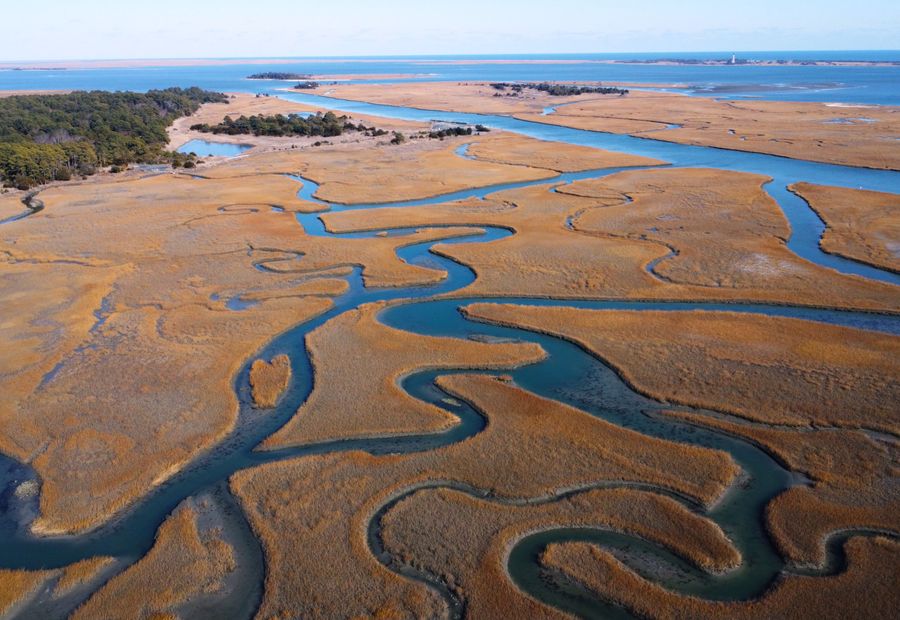
A living shoreline stops erosion with graded stone, sand, and marsh grass instead of a bulkhead. We build a low rock sill just off the bank, place sand behind it, and plant native marsh in the sand. The sill and the marsh absorb wave and wake energy and hold the bank, and the marsh keeps growing and repairing itself. On sheltered creeks and coves it outperforms a wall over time and it adds habitat and filters the water instead of reflecting energy onto your neighbor.
Why the State Asks About It First
Virginia law makes the living shoreline the preferred method of shoreline management on tidal water where the site suits it. That is not red tape for its own sake. A hard wall reflects wave energy, can scour the bottom in front of it, and gives the estuary nothing back, while a living shoreline absorbs energy and builds marsh. When you apply to build or replace a wall, the Virginia Marine Resources Commission and your wetlands board will ask whether a living shoreline would work on your bank. We answer that honestly on the first visit.
Riprap for the Harder Banks
A planted living shoreline is not right for every bank. Where the fetch is long and the boat wake is steady, a riprap revetment, a graded rock slope keyed into the bank over filter fabric, is the durable answer, and it can be combined with marsh plantings behind it for the best of both. Riprap absorbs wave energy instead of reflecting it, drains freely, and has no anchors or sheathing to fail. We size the stone and the slope to the energy your bank actually takes.
Matching the Method to the Bank
The failures we get called to fix are usually a method put on the wrong bank: a wall where a living shoreline belonged, or plantings where the bank needed rock. We read the fetch, the wake, the slope, and the soil, then recommend the approach that holds, whether that is a wall, a living shoreline, riprap, or a hybrid of them. The estuary and the permit both reward getting it right.
Watching your bank wash away? Call (757) 555-0182 and we will tell you whether your shoreline wants a wall, rock, marsh, or a mix of the three.
What is a living shoreline?
It is erosion control that uses graded stone, sand, and marsh plants instead of a vertical wall. A low rock sill is built just offshore, sand is placed behind it, and native marsh grass is planted in the sand. The marsh and the sill absorb wave energy and hold the bank, and the plantings keep growing and self-repairing. On sheltered tidal water it can outperform a bulkhead and it improves the water and habitat rather than reflecting wave energy onto the next lot.
Why does Virginia prefer a living shoreline over a bulkhead?
State law makes the living shoreline the preferred method of shoreline management on tidal water where it is suitable, because a hard wall reflects wave energy, can scour the bottom, and offers nothing to the estuary, while a living shoreline absorbs energy and adds marsh habitat. When you apply to build or replace a wall, the reviewers will ask whether a living shoreline would work on your bank. We tell you honestly whether yours is a candidate, because a living shoreline in the wrong spot fails as surely as a wall does.
Will a living shoreline hold on my bank, or do I need riprap?
It depends on how much wave and wake your bank takes. On low-energy creeks and coves a planted living shoreline holds well. On a bank that takes real fetch and boat wake, a riprap revetment, a graded rock slope keyed into the bank, may be the durable answer, sometimes combined with marsh plantings behind it. We read the fetch, the wake, and the slope and recommend the one that will actually hold, not the one that is easiest to sell.
Is a living shoreline cheaper than a bulkhead?
Often, and it can also be easier to permit because the state favors it. A rock sill and plantings can cost less than a driven vinyl wall on a suitable bank, and it does not have anchors and sheathing to fail later. The trade is that it needs the right, lower-energy site and a season or two for the marsh to establish. On the right bank it is the better value; on an exposed one a wall or riprap is worth the money.